





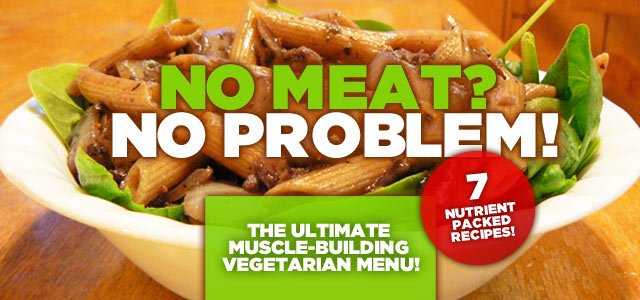
Vegetarian for a day—this meal plan will help you build muscle! |
Power Plants: The Ultimate Muscle-Building Vegetarian Menu!
When you hear the words "buff vegetarian," does anyone come to mind? How about former Mr. Universe Bill Pearl and six-time Ms. Olympia Cory Everson? These eye-popping physiques were both supported by a vegetarian diet.
It's more than possible to build lean muscle without eating meat. If it sounds crazy, keep reading.
Do you want to expand your grocery-shopping horizons, pack in new sources of high-quality nutrients, and still consume 150-plus grams of protein in one day? Well, you'll get all that and more from the meatless meal plan below.
So if you're taste buds and food sensibilities are begging for a change-Ah! Not another chicken breast!-why not try vegetarian for a day?

You don't have to eat like a rabbit, and you don't have to commit to lifelong veggie-worship to take vegetarianism for a test drive.
It's all about complementary proteins and taking in all of your amino acids, minus the meat. But let's skip the science and get to the mouthwatering recipes, shall we?
Breakfast: Tofu And Spinach Scramble With Sweet Cinnamon Quinoa (Side)

Nutrition Facts: Entire meal, including quinoa on the side
Calories: 418
Fat: 26grams
Carbs: 29 grams
Fiber: 7.5 grams
Protein: 31 grams
Calories: 418
Fat: 26grams
Carbs: 29 grams
Fiber: 7.5 grams
Protein: 31 grams
What You Need:
- 8 ounces firm Tofu (chopped or crumbled)
- 2 egg whites
- 2 cups spinach
- 1/2 cup sliced mushrooms
- 1/2 cup cherry tomatoes
- Olive oil, fresh garlic, soy sauce, lemon juice and salt and pepper to taste
- A sprinkle of red chili flakes if you like it hot!
What You Need To Do:
Heat 1 teaspoon of olive oil in a pan on medium heat (less oil if the pan is non-stick). Throw in tomatoes, mushrooms, and 1 clove of garlic (crushed or chopped), and let everything cook until the mushrooms have softened, turning slightly golden brown.
Turn the heat to low and throw in the tofu, a splash of soy sauce, splash of lemon, and your salt and pepper to taste. Cook for another 3-5 minutes, letting some of the liquid cook off and the tofu to warm up.
Turn off the heat and mix in the spinach.
On the side you can add 1/4 cup of your pre-cooked quinoa. But before you serve the quinoa, here's an easy way to jazz it up for breakfast.
Side: Sweet Cinnamon Quinoa

What You Need:
- 1/4 cup cooked quinoa
- 1 palm-full of walnuts or pecans (7-10 individual nuts)
- 1 palm-full of blackberries or blueberries
- Sprinkle of cinnamon
- Sweeten with stevia (zero-calorie, natural sweetener) or use agave nectar or a bit of honey
What You Need To Do:
Reheat your quinoa in the microwave (you can add a splash of soy milk, almond milk, or hemp milk if you want it to be more moist).
Add the walnuts, blackberries, cinnamon and stevia and mix it all together with a spoon.
Serve warm!
Mid-Afternoon Meal: Greek Yogurt, Almonds, And Dried Apricot

Calories: 428
Fat: 23 grams
Carbs: 31 grams
Fiber: 5 grams
Protein: 23 grams
What You Need:
- 8 ounces of Greek Style Yogurt
- 1-2 palm-fulls of raw or roasted almonds (unsalted and unsweetened)
- 1 palm-full of dried apricot
- 1 packet of Stevia (zero calorie sweetener) or a bit of agave or honey
What You Need To Do:
Combine all the above ingredients and chow down!Lunch: Portabella And "Sausage" Pasta With Spinach

Nutrition Facts:
Calories: 444
Fat: 16 grams
Carbs: 32 grams
Fiber: 15 grams
Protein: 28 grams
Calories: 444
Fat: 16 grams
Carbs: 32 grams
Fiber: 15 grams
Protein: 28 grams
What You Need:
- 1 cup portabella mushroom caps, sliced
- 4 ounces of Gimme Lean Ground Sausage (about 1/3 of the package)
- 1/2 cup chopped onions
- 1/4 cup red wine
- 1 tbsp olive oil
- 1 cloves garlic, finely chopped or crushed
- Salt, Black Pepper, Basil, Oregano to taste
- 1 ounce dry, whole-wheat penne pasta
- 2 cups fresh spinach
- Drizzle of balsamic vinegar
Note: You can choose any whole wheat pasta that you'd like or even a specialty pasta such as pastas made with quinoa flour or brown rice flour. Read the nutrition label to understand how much pasta equals one serving.
What You Need To Do:
Heat the tablespoon of olive oil on medium in a large saute pan. When the oil is hot, place onion, mushrooms, and garlic in the pan. Cook 2 to 3 minutes, until the vegetables start to shrink and/or brown a little bit.
They shouldn't be cooked all the way through. Add your favorite cooking red wine (I found both Merlot and Cabernet to be good options for this meal) and the "sausage" to the pan.
Cook all together until the alcohol has cooked out of the wine and little liquid remains. Add your spices to the pan, to your taste.
Cook the pasta according to package directions, and then add your mushroom and sausage mix to the pasta. Mix well and place on top of a bed of fresh spinach.
Drizzle with balsamic and eat up! I like this meal hot and cold.
Snack: Edamame, Hummus, Whole Grain Crackers

 Click To Enlarge.
Edamame and hummus cracker sandwiches saying, 'Eat me, please!'
Nutrition Facts:
Calories: 335
Fat: 16.5 grams
Carbs: 35 grams
Fiber: 10 grams
Protein: 18 grams
Calories: 335
Fat: 16.5 grams
Carbs: 35 grams
Fiber: 10 grams
Protein: 18 grams
What You Need:
- 3 ounces of fresh or boiled edamame (immature green soybeans-Don't eat the shells!)
- 2 or 3 tbsp hummus
- 1 ounce whole grain crackers (usually between 7 to 10 crackers depending on the product, but my favorite is Kashi Heart to Heart Whole Grain)
What You Need To Do:
"Put the lime in the coconut and drink it all up. Put the lime in the..." Wait, wrong instructions.
This one is simple: Hold, dip, munch. Construct an edamame and cracker tower with hummus as cement. Challenge yourself - how high can you stack?
Annoy your cubicle buddies with the sound of crunching. After all, it's good for your health, and that's what matters.
Dinner: Meatless Nachos With Easy Guacamole (Side)
 Click To Enlarge.
Meatless Nachos with Easy Guacamole
Nutrition Facts: Meatless Nachos
Calories: 410
Fat: 13 grams
Carbs: 45 grams
Fiber: 15 grams
Protein: 31 grams
Calories: 410
Fat: 13 grams
Carbs: 45 grams
Fiber: 15 grams
Protein: 31 grams
What You Need:
- 4 ounces of Gimme Lean Ground Sausage
- 1/4 cup black beans
- 1/4 cup low-fat shredded cheese blend
- 10 multigrain tortilla chips (My favorite are Food Should Taste Good Multigrain Tortilla Chips)
- Optional: red chili pepper flakes
Note: If you use canned beans for the convenience factor, make sure to rinse the beans in cold water and drain them before using.
What You Need To Do To Make The Nachos:
Mix the black beans and Gimme Lean Ground Sausage in a microwave safe bowl. Heat the bean and "sausage" mixture for 1 to 2 minutes until hot.
Sprinkle with cheese and red chili pepper flakes if you're brave enough. Eat with tortilla chips!
Add 1 or 2 tablespoons of the home-made guacamole recipe below for added flavor and a boost of healthy fats and protein from nutritious avocado and quinoa!
Optional: serve nachos on a bed of fresh spinach
Side: Easy Guacamole (Makes About 2.5 Cups)
Nutrition Facts: Easy Guacamole - 1 Tablespoon
Calories: 25
Fat: 2.5 grams
Carbs: 4 grams
Fiber: Less than 1 gram
Protein: 1 gram
Calories: 25
Fat: 2.5 grams
Carbs: 4 grams
Fiber: Less than 1 gram
Protein: 1 gram
What You Need:
- 1 ripe avocado
- 1/4 cup cooked quinoa
- 1/4 cup chopped red onion
- 1/2 cup chopped tomato
- 1 lime
- 2 tbsp fresh cilantro, chopped
- Salt, black pepper, ground cumin
What You Need To Do To Make Easy Guacamole:
Mix the avocado, quinoa, red onion, tomato, and cilantro together in a bowl. Add lime and your spices to taste!
Refrigerate before serving, if desired.
Desert: Protein Pudding Or Low-Carb Smoothie
 Click To Enlarge.
Protein Pudding made from Optimum Nutrition's Nitro Core 24 in Sensational Cinnamon Roll flavor.
What You Need:
- Your favorite high-quality protein powder in your favorite flavor.
- A liquid: Choose ice to blend with your shake, or you can use water, soy milk or almond milk.
Tips: To make protein pudding, start with a very small amount of liquid and mix the protein powder and liquid together until it forms a pudding like texture. Casein protein or protein blends tend to work best for the pudding effect.
You can also add a bit of almond butter, Greek yogurt, cinnamon, nuts, or blueberries to make a fancy dessert.
You can even add almond or peanut butter to your protein smoothies for a boost of healthy fats and a creamy texture.
If you choose to include a high-protein dessert, you'll add between 130 and 200 calories to your day, and 1 scoop of most protein powders includes at least 20 grams of protein!
Daily Nutrient Total—The Whole Shebang
Nutrition Facts: (Including dessert)
Calories: 2260
Fat: 120 grams
Carbs: 176 grams
Fiber: 53 grams
Protein: 154 grams
Calories: 2260
Fat: 120 grams
Carbs: 176 grams
Fiber: 53 grams
Protein: 154 grams
The Take-Home Lessons
There you have it--1 gram of protein per pound of body weight for someone weighing 154 pounds. If you want more or less protein-or if you're trying to get below 2200 calories-this meal plan can be easily modified.
Here are some ideas: Scramble egg whites and add them to your lunch and dinner. Add whey protein to your Greek yogurt. Use two scoops of protein powderinstead of one, or add in another protein shake with water sometime during the day-perfect for a post-workout meal.
On the other hand, you can always cut down the portions of meals, leave out the quinoa for the day and drink an extra protein shake instead, or skip the guacamole.
Remember that you're not baking a souffle here. It's not food science. You can replace any ingredients you don't like with ones that you do. Mushrooms gross you out?
Try grilled zucchini or asparagus. You won't always get the same nutrient breakdown, but the calorie count should be close enough to keep you on track with your fitness goals.
Vegetarians can't build muscle? Think again.


